
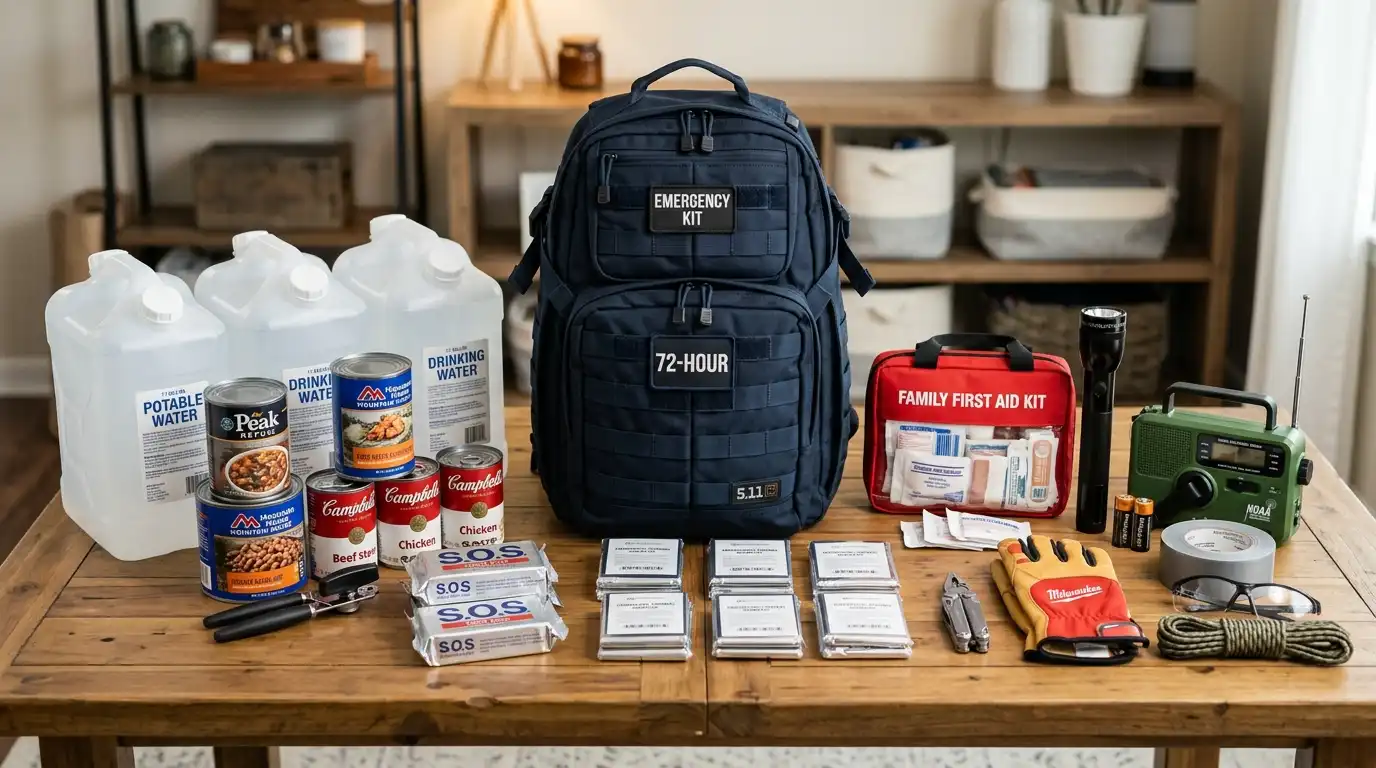
When severe weather hits, power grids fail, or natural disasters strike without warning, the first 72 hours are critical. During a major crisis, municipal water systems can become contaminated, grocery store shelves clear out instantly, and emergency first responders may be overwhelmed. Having a fully stocked, accessible 72-hour emergency kit allows your household to remain self-sufficient until public utilities and disaster relief arrive.
Building a disaster supply kit does not require complex tactical gear or expensive survival setups. By focusing on core physiological needs—hydration, nourishment, medical care, communication, and environmental protection—you can build a reliable family safety net.
1. Water and Hydration: The Top Priority
Water is the single most vital component of any survival plan. While a person can survive several days without food, dehydration can become life-threatening within a short window, especially during extreme heat or high physical effort.
Standard Water Quantities
Follow standard disaster guidelines by storing at least one gallon of water per person per day for a minimum of three days. For a family of four, this translates to twelve gallons of water reserved strictly for drinking and basic sanitation.
Backup Purification Methods
Because stored water containers can be heavy to transport during an immediate evacuation, supplement your supply with portable purification options:
- Water Purification Tablets: Lightweight, inexpensive, and capable of treating clear water against common waterborne pathogens.
- Personal Water Filters: Straw-style or squeeze filters rated at 0.1 microns to filter out bacteria and protozoa from natural water sources.
- Unscented Household Bleach: A bottle of regular liquid bleach paired with a dropper can disinfect water in emergency conditions (8 drops per gallon of clear water).
2. Non-Perishable Food & Nutrition
In a high-stress emergency, your body burns through calories quickly. Your 72-hour food supply should be shelf-stable, require zero refrigeration, and demand minimal or no cooking fuel and water preparation.
High-Calorie, Ready-to-Eat Items
Stock nutrient-dense, familiar foods that your family actually enjoys eating:
- Canned meats (tuna, chicken, turkey, or salmon) and ready-to-eat chili or stews.
- Peanut butter, seed butters, and high-protein nut mixes.
- Energy bars, granola bars, and dried fruit mixes.
- Canned vegetables, beans, and fruit packed in juice.
- Infant formula and baby food pouches if caring for young children.
Pro Tip: Always pack a manual, heavy-duty can opener directly inside your kit. Electric can openers are useless during a power outage, and pop-top lids can break off.
3. Comprehensive First Aid & Medical Supplies
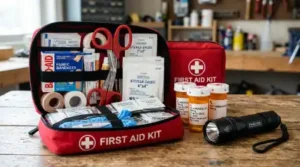
Minor cuts, burns, and injuries can quickly escalate into infections during a disaster when hospitals and urgent care clinics are closed or inaccessible.
Core Medical Inventory
A well-rounded emergency medical kit should go beyond simple adhesive bandages to include:
- Sterile gauze pads, roller bandages, and medical tape for larger wounds.
- Antiseptic wipes, triple antibiotic ointment, and burn gel.
- Nitrile gloves, trauma shears, metal tweezers, and safety pins.
- Over-the-counter medications: pain relievers, anti-diarrheals, antacids, and antihistamines.
Prescription Medications and Special Needs
Keep a rolling 7-day supply of critical daily prescription medications (such as insulin, blood pressure medication, or asthma inhalers) stored near your kit, along with spare prescription eyeglasses or contact lens supplies.
4. Communication, Light, and Navigation
Disasters often sever local cellular networks and power lines, cutting families off from official news updates and digital maps. Maintaining situational awareness is crucial for knowing when and where to evacuate safely.
Powering Up Communications
Equip your kit with a battery-powered or hand-crank NOAA Emergency Weather Radio. These radios receive continuous real-time hazard broadcasts directly from local meteorological authorities without relying on internet access. Pack extra batteries or a solar-powered power bank to keep cell phones charged for emergency calls.
Illumination and Signaling
Individual hands-free headlamps are far superior to standard hand-held flashlights, allowing you to carry gear or tend to injuries in the dark. Add a high-decibel safety whistle to your kit; a whistle carries much farther than the human voice and conserves your energy if you become trapped or need rescue.
5. Sanitation, Personal Hygiene, and Tools
Maintaining basic cleanliness prevents the spread of illness when running water is shut off. Store heavy-duty trash bags, zip-ties, moist towelettes, hand sanitizer, antibacterial soap, and feminine hygiene products together in a waterproof bag.
For general utility and shelter needs, ensure your bag contains:
- A robust multi-tool with pliers, wire cutters, and knife blades.
- Duct tape and heavy-duty plastic sheeting for sealing broken windows or creating temporary shelter.
- Leather work gloves to protect hands while clearing debris or glass.
- Mylar thermal emergency blankets to retain body heat during cold weather outages.
6. Important Documents & Emergency Cash
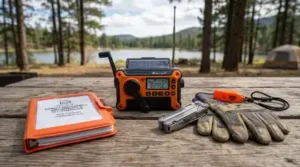
In the rush of an evacuation, retrieving physical paperwork can be impossible. Secure copies of critical personal documents inside a sealable, waterproof document pouch:
- Government IDs, passports, birth certificates, and social security cards.
- Home, health, and vehicle insurance policies with claim phone numbers.
- Medical history records, immunization files, and emergency contact lists.
- Cash in small bills ($1, $5, $10); card readers and ATMs will not function during power outages.
Summary
Assembling a family 72-hour emergency kit is one of the most effective steps you can take to protect your household against unexpected disasters. Store your supplies in a durable, easy-to-grab container—such as a large rolling tote or ergonomic backpacks—and review your kit every six months to rotate food, check battery charges, and update prescription supplies.