
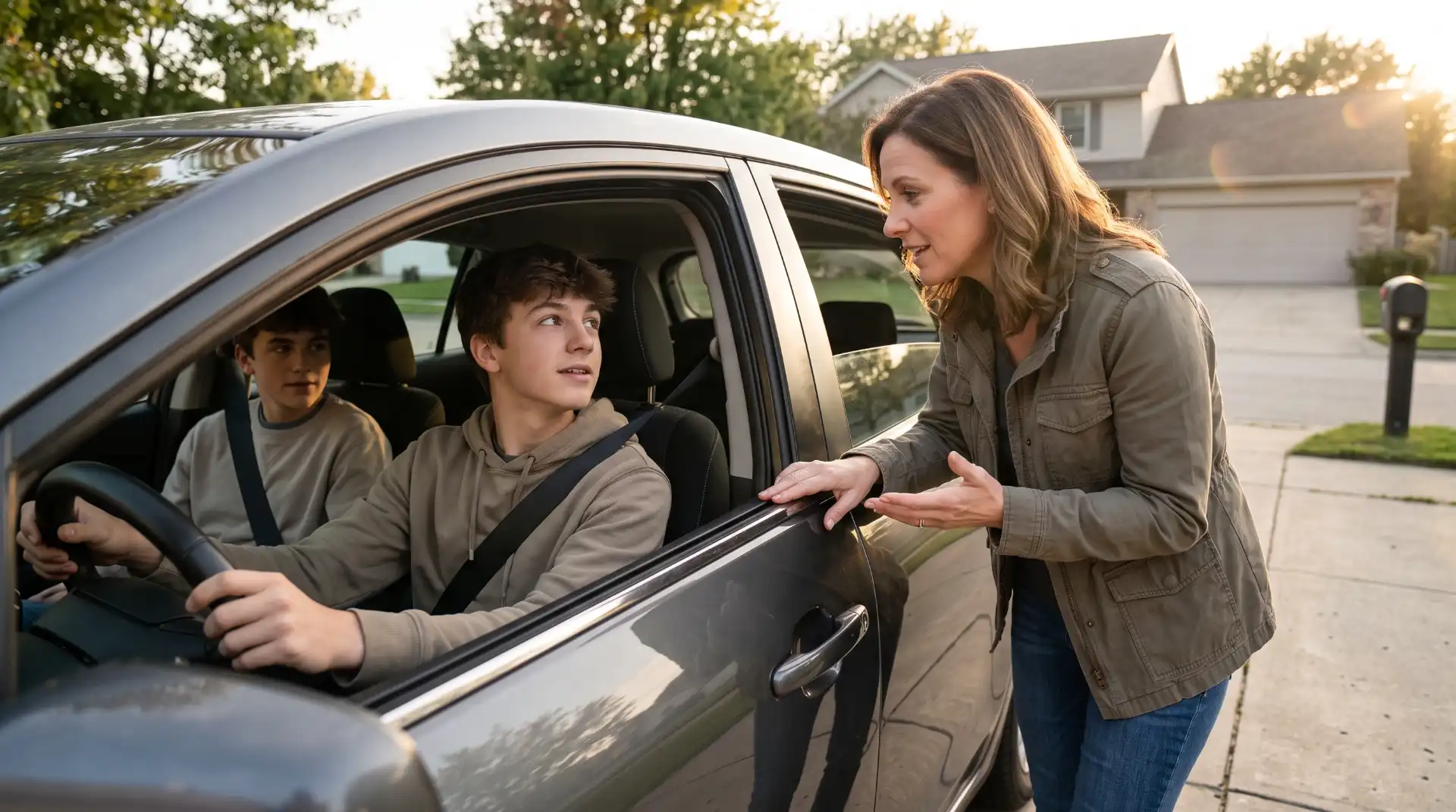
Getting a driver’s license is an exciting milestone for American teenagers. It creates opportunities for greater independence, makes school and work commutes easier, and allows young people to participate more fully in their communities. For parents, however, a teenager’s first months behind the wheel can also bring understandable concerns about road safety, decision-making, and the possibility of a serious collision.
Teen driver safety in 2026 remains an important issue for families, schools, and communities throughout the United States. Although modern vehicles offer advanced safety features and driver education programs provide essential training, inexperienced drivers still face challenges that require time, practice, and responsible guidance. Understanding these challenges is the first step toward reducing preventable crashes.
The greatest risks often involve a combination of factors rather than one isolated mistake. A teenager may be driving too fast while distracted by a smartphone, carrying friends who encourage risky behavior, or traveling late at night after a demanding school day. Each circumstance can affect attention and judgment, and several occurring together can make an already difficult situation more dangerous.
Parents cannot control every road condition or the behavior of every motorist. However, they can help teenagers build safer habits through supervised driving, consistent family rules, appropriate vehicle selection, and regular conversations about responsible decisions.
This comprehensive guide explains the biggest risks facing teen drivers in 2026, offers practical prevention strategies for American families, and outlines how parents can help teenagers become safer and more confident drivers.
Why Teen Driver Safety Deserves Attention in 2026
Driving is a complex skill that requires much more than knowing traffic signs and passing a road test. Drivers must continually observe their surroundings, anticipate hazards, judge distances, estimate the speed of other vehicles, and make decisions under changing conditions. Experienced motorists often perform these tasks automatically, but teenagers are still developing the judgment and experience necessary to handle unexpected situations consistently.
The National Highway Traffic Safety Administration (NHTSA) identifies young drivers as an important group for traffic safety education. Teenagers face elevated risks associated with inexperience, distraction, speeding, nighttime driving, passengers, and failure to use seat belts. These risks can affect drivers, passengers, pedestrians, cyclists, and other people sharing the road.
Understanding the broader picture can help families make better decisions. AccidentSafety.org’s guide to interpreting motor vehicle fatality statistics explains why crash numbers, contributing factors, and fatality rates need to be considered carefully when evaluating roadway safety.
Statistics should not simply frighten parents or teenagers. Their purpose is to identify preventable dangers and guide practical improvements. A family that recognizes distraction as a concern can introduce a phone-free driving rule. Parents who understand passenger-related risks can establish limits during the early months of independent driving. A teenager who struggles with nighttime visibility can receive additional supervised practice before driving alone after dark.
The most effective approach combines education with action. Instead of assuming that a teenager will automatically become a safe driver after receiving a license, parents should treat the licensing process as the beginning of a longer period of learning.
Distracted Driving: The Smartphone Problem
Smartphones are part of everyday teenage life. Young people use them to communicate with friends, check school information, listen to music, navigate unfamiliar places, and access entertainment. While these activities may be harmless when someone is not driving, they can become dangerous when performed behind the wheel.
Distracted driving occurs when a driver’s attention moves away from operating the vehicle. Visual distraction involves looking away from the road, manual distraction involves taking a hand away from driving tasks, and cognitive distraction occurs when the driver’s mind is focused on something other than driving. Texting can combine all three forms of distraction.
A quick glance at a notification can be enough to prevent a driver from noticing a vehicle braking ahead. Reading a message may cause a teenager to miss a pedestrian approaching a crosswalk or fail to recognize that traffic has slowed. Even when the road appears clear, conditions can change suddenly.
Distraction is not limited to smartphones. Adjusting a dashboard touchscreen, searching for music, eating, reaching into a bag, or turning toward a passenger can also interfere with attention. Modern vehicles may have large infotainment displays and connected features, but technology does not eliminate the need for drivers to remain focused.
How parents can prevent distracted driving
Families should establish a clear rule that phones are not handled while the vehicle is moving. Before departure, teenagers should enter their destination, select music, adjust climate controls, and secure their belongings. A phone should be placed somewhere it cannot easily tempt the driver to check notifications.
Driving focus or do-not-disturb settings can help reduce incoming alerts. However, parents should explain that these tools support safe behavior rather than guarantee it. A teenager must still resist the temptation to interact with the screen, even when a notification appears important.
Parents should also make it clear that passengers must not pressure the driver to read messages, record videos, take photographs, or respond to social media. If a teenager needs to answer an urgent communication, the vehicle should first be stopped in a safe and lawful location.
Adult behavior matters just as much. Parents who check messages while driving send a conflicting message when they ask their teenagers to keep their phones away. Families should adopt consistent rules that apply to every driver in the household.
The objective is to make distraction prevention automatic. When teenagers develop the habit of preparing everything before moving, they are less likely to make unnecessary adjustments while navigating traffic.
Speeding and Risky Driving Decisions
Speeding is another major concern for young drivers. Traveling too fast reduces the time available to recognize hazards and respond to changing conditions. It also increases stopping distance and can make a collision more severe.
Teenagers may speed because they are late for school, trying to keep up with friends, unfamiliar with a route, or overconfident in their driving abilities. Some may believe that exceeding the posted speed limit is acceptable when traffic is light. Others may underestimate how quickly a vehicle can approach an intersection or how much space is needed to stop.
Safe driving requires understanding that the posted speed limit is not always the safest speed for current conditions. Rain, fog, poor visibility, construction, heavy traffic, and sharp curves can all require a driver to slow down. The responsibility is to adjust speed to the road, weather, traffic, and available visibility.
Teaching better speed management
Parents can use supervised practice to help teenagers recognize speed limits and identify situations that require additional caution. Ask the new driver to explain why a residential street, school zone, busy shopping district, or highway interchange may require a different approach.
Following distance should also be a regular part of practice. Drivers who follow too closely have less time to respond when the vehicle ahead brakes suddenly. Teenagers should learn to leave a generous gap and increase it when visibility or road grip is reduced.
Families can also reduce time pressure by planning trips in advance. If a teenager is consistently late for school or work, help adjust the departure schedule rather than allowing rushed driving to become normal.
Enforcement is another part of the broader safety picture. AccidentSafety.org’s article on how automated speed enforcement reduces traffic fatalities discusses the role of speed management and enforcement in roadway safety. Parents can use this topic to explain why speed limits are intended to protect road users, not merely to prevent tickets.
When speeding occurs, parents should address it directly. Depending on the circumstances, additional supervised driving, a temporary restriction on independent trips, or a review of the family’s driving agreement may be appropriate. The purpose is to correct the behavior before it leads to a serious incident.
Teen Passengers and Peer Pressure
For many teenagers, earning a driver’s license means being able to travel with friends without depending on parents for transportation. While this independence is important, passengers can create additional distractions for inexperienced drivers.
Friends may talk loudly, play music, joke around, or encourage the driver to accelerate or make risky maneuvers. A teenager may also feel pressure to appear confident, avoid criticism, or demonstrate driving skills. These social pressures can influence decisions that would otherwise be more cautious.
Even passengers who have no intention of causing trouble can affect the driver’s concentration. A new driver must already divide attention among steering, speed, mirrors, road signs, traffic signals, and other vehicles. Conversation and activity inside the car add another demand.
Establish passenger limits early
Parents should review their state’s graduated driver licensing requirements before allowing a teenager to transport friends. Many states impose passenger restrictions on newly licensed drivers, although the details and duration of these restrictions vary.
Families can adopt additional limits based on the teenager’s experience. During the first months of independent driving, parents might prohibit teen passengers except for permitted family members or allow only one passenger when the law allows it. Restrictions can be reviewed as the driver demonstrates responsible behavior.
Teenagers should also practice refusing peer pressure. Simple statements such as “I’m not speeding,” “Please buckle your seat belt,” and “I need to focus on the road” help young drivers establish boundaries without getting drawn into an argument.
Parents can reinforce that a friend who respects them should also respect their safety decisions. No teenager should feel obligated to take risks to impress someone else.
Passenger responsibility deserves attention, too. Everyone in the vehicle should wear a seat belt, avoid distracting behavior, and speak up if the driver is acting dangerously. A safe journey depends on the behavior of the entire group, not only the person holding the steering wheel.
Nighttime Driving and Reduced Visibility
Driving after dark can be difficult even for experienced motorists. Headlights illuminate only part of the roadway, pedestrians and cyclists may be harder to see, and glare from oncoming traffic can interfere with visibility. New drivers may have particular difficulty judging distances and recognizing hazards in low-light conditions.
Night driving can also overlap with fatigue. Teenagers may leave late sporting events, work shifts, social gatherings, or school activities after spending an entire day studying and participating in other responsibilities. A tired driver may have slower reactions and reduced concentration.
Parents should not assume that passing a road test means a teenager is ready for every nighttime situation. Night driving is a skill that should be developed gradually.
Build nighttime experience safely
Start with familiar, well-lit roads during early evening hours. Once the teenager demonstrates reliable speed control, observation, and lane positioning, introduce more challenging routes when conditions are suitable.
During practice, discuss how to recognize pedestrians near intersections, maintain an appropriate following distance, and respond calmly to headlight glare. Teenagers should understand that they must not stare directly at bright headlights and should keep their attention on the roadway ahead.
Families should establish nighttime driving rules that comply with state law and reflect the teenager’s experience. Parents may choose to limit late-night independent trips during the first several months of driving, even when the law permits more freedom.
Vehicle maintenance is especially important after dark. Headlights, taillights, turn signals, windshield wipers, and the windshield itself should be kept in good condition. Dirty glass, worn wiper blades, and malfunctioning lights can make visibility problems worse.
If a teenager is tired after an evening event, arranging a ride may be safer than insisting that the young driver return home independently. Independence should develop alongside sound judgment, not at the expense of it.
Seat Belts and Passenger Protection
Seat belts remain among the most important safety measures available to vehicle occupants. They help restrain the body during a crash, reducing the risk of striking interior surfaces or being ejected from the vehicle.
Some teenagers may neglect seat belts on short trips or assume that they are unnecessary when traveling at low speeds. Others may feel uncomfortable being the only person in a group who insists on buckling up. These attitudes can be dangerous because crashes can happen close to home and without warning.
Parents should establish a rule that the vehicle does not move until everyone is properly buckled. This applies to the driver, front passenger, and all rear-seat occupants. A passenger who refuses to wear a seat belt should not be allowed to pressure the driver into departing.
The driver also has a responsibility to protect passengers. Teenagers should understand that driving is not simply a personal activity; their decisions can affect the lives and safety of everyone in the vehicle.
Model consistent seat belt use
Parents should wear seat belts every time they drive, regardless of the distance traveled. Children and teenagers are more likely to accept safety rules when they see adults following them consistently.
The lap belt should sit low across the hips, and the shoulder belt should cross the chest. The shoulder belt should never be placed behind the back or under the arm. Families should consult the vehicle manual and appropriate safety guidance if a seat belt does not fit correctly.
Parents should also explain that unrestrained passengers can become seriously injured and may endanger other occupants during a collision. Wearing a seat belt is a basic responsibility shared by everyone in the car.
Drowsy Driving and Teen Sleep Schedules
Fatigue can affect reaction time, attention, and decision-making. A sleepy driver may fail to notice a traffic signal, drift within a lane, or respond too slowly when a vehicle brakes ahead.
Teenagers often balance school, homework, sports, part-time employment, and social commitments. These activities can reduce the amount of sleep they get, especially when combined with early school start times or late-night responsibilities.
A teenager who feels exhausted should not assume that loud music, an open window, or an energy drink will reliably restore the concentration needed for safe driving. If the driver is too tired to remain alert, the safest option is to stop driving and arrange appropriate assistance.
Help teenagers recognize fatigue
Parents can make sleep part of the family’s driving-readiness discussion. Before a long trip, teenagers should consider whether they are rested, whether they feel unusually sleepy, and whether the journey can be postponed.
Families should also establish a plan for what happens if a teenager becomes tired while driving. The driver should seek a safe place to stop rather than attempting to push through exhaustion. If the teenager cannot continue safely, a trusted adult should help arrange another ride.
Scheduling can reduce unnecessary risks. Parents can encourage teenagers to avoid late-night trips before school days, allow sufficient time for travel, and avoid combining demanding activities with long drives whenever possible.
Recurring fatigue should be taken seriously. If a teenager regularly struggles to stay awake, parents should help identify the underlying issue and consider whether professional advice is appropriate.
Alcohol, Cannabis, and Other Impairing Substances
Alcohol and other impairing substances can affect judgment, coordination, attention, and reaction time. Teenagers may underestimate these effects or believe that a short drive is manageable after consuming a substance. Such assumptions can put drivers, passengers, pedestrians, and other road users at risk.
In the United States, the minimum legal drinking age is 21, and states have laws addressing alcohol use by underage drivers. Exact provisions vary by state, but teenagers should never assume that consuming a small amount of alcohol makes driving acceptable.
Cannabis and some prescription or over-the-counter medicines can also affect driving ability. Certain medications cause drowsiness or dizziness, while others may interfere with concentration or coordination. Teenagers should read medication instructions and consult a pharmacist or healthcare professional if they are unsure whether a medicine affects driving.
Create a family plan for impaired driving
Parents should make it clear that a teenager must never drive after drinking alcohol or using a substance that impairs driving. The same rule applies when a friend who has been drinking offers to drive.
Families can establish an emergency transportation agreement that allows a teenager to call a parent or trusted adult for help. The immediate priority should be preventing an impaired person from getting behind the wheel.
Parents can address consequences and discuss the circumstances after everyone is safe. If teenagers believe that asking for a ride will automatically lead to an angry confrontation before they can get home, they may be more likely to make a dangerous decision.
Adults should model the same behavior. Never driving under the influence reinforces the message that impaired driving is unacceptable regardless of age, experience, or distance.
Intersections, Pedestrians, and Cyclists
Intersections require drivers to monitor multiple sources of information at the same time. A teenager may need to check traffic signals, watch turning vehicles, identify pedestrians, notice cyclists, and judge whether a gap in traffic is large enough to proceed safely.
Inexperienced drivers can focus too narrowly on the vehicle ahead or assume that other road users will always follow the rules. They may also misjudge the speed of an approaching vehicle when turning across traffic.
Busy intersections near schools, shopping centers, and residential neighborhoods deserve particular attention. Children may enter a crosswalk unexpectedly, cyclists may travel alongside vehicles, and parked cars may obstruct the driver’s view.
Practice hazard recognition
During supervised driving, ask teenagers to scan the entire intersection instead of looking only at the traffic signal. They should identify pedestrians waiting to cross, cyclists approaching from the side, and vehicles that may turn across their path.
A green light does not eliminate the need to check that an intersection is clear. Drivers should remain alert to vehicles entering late and road users who may be difficult to see.
Teenagers should also avoid rushing through intersections because they fear waiting for another signal cycle. Safe driving requires patience and observation, especially when visibility is limited or traffic is unpredictable.
Parents can make practice more effective by asking the teenager to explain what they see ahead and what hazards might develop. This encourages active observation rather than passive driving.
Bad Weather and Unfamiliar Roads
Rain, fog, standing water, snow, and ice can make driving more difficult. Wet pavement may reduce traction, poor visibility can conceal hazards, and sudden weather changes may require a driver to adjust speed quickly.
Teenagers may also struggle when navigating unfamiliar routes. Complicated interchanges, construction zones, lane closures, and last-minute navigation instructions can create pressure to make sudden decisions.
Parents should help teenagers understand that safe driving includes recognizing personal limits. A new driver does not need to prove independence by driving through severe weather or navigating an unfamiliar route without preparation.
Prepare before the journey
Before departure, review the route and check expected conditions. The teenager should understand where major turns occur, which roads may be busy, and whether alternative routes are available.
During practice, teach teenagers to slow down appropriately, leave additional following distance, and avoid abrupt braking or steering on slippery surfaces. They should follow the vehicle manufacturer’s guidance for driving in poor weather.
If navigation becomes confusing, the driver should focus on maintaining safe control of the vehicle. The teenager can find a suitable place to stop before changing the route or reviewing directions.
Parents should reinforce that postponing a trip is sometimes the safest decision. Good judgment includes recognizing when conditions exceed the driver’s current experience.
Choosing a Safe First Car in 2026
The vehicle a teenager drives can influence both crash risk and protection in a collision. Families may have limited budgets, but purchase price should not be the only consideration when selecting a first car.
Parents should consider crash-test performance, reliability, available safety equipment, maintenance costs, insurance expenses, and the vehicle’s overall condition. A vehicle with a powerful engine or sporty handling characteristics may encourage risky behavior, particularly when the driver is inexperienced.
Which safety features matter?
Electronic stability control, properly functioning airbags, anti-lock brakes, and effective seat belts are important safety foundations. Depending on the model, additional features may include automatic emergency braking, forward collision warning, blind-spot monitoring, and rear cross-traffic alerts.
These technologies can help prevent or reduce certain collisions, but they do not replace attentive driving. Sensors can have limitations in poor weather, unusual road layouts, and situations involving obstructed lane markings.
Families should check for outstanding recalls before purchasing a used vehicle. Recalls may involve airbags, brakes, steering, seat belts, or other safety-related components. Parents should also arrange an appropriate mechanical inspection and review the maintenance history.
Tires, brakes, lights, windshield wipers, and warning indicators deserve particular attention. Even a vehicle equipped with advanced driver assistance systems needs regular maintenance to remain safe.
The best first car is not necessarily the newest or most expensive. It is a vehicle with good safety credentials, reliable mechanical condition, manageable performance, and features appropriate for the teenager’s needs.
Graduated Driver Licensing and State Requirements
Graduated driver licensing, commonly called GDL, allows teenagers to gain driving experience in stages. These programs generally begin with supervised driving and gradually introduce independent driving privileges.
Requirements vary by state. Rules may cover the minimum permit age, supervised practice hours, the length of the learner’s permit period, passenger restrictions, nighttime driving, and the age at which an unrestricted license becomes available.
Parents should consult their state’s official licensing agency rather than relying on advice from friends or relatives in another state. Even neighboring states may have different requirements, and laws can change.
Go beyond the legal minimum
Meeting the licensing requirements is essential, but it does not automatically mean that a teenager is prepared for every driving situation. A new driver may need additional practice with highway merging, parking, night driving, wet roads, or complicated intersections.
Parents can use the GDL process as a framework for gradually increasing privileges. A teenager might earn permission for more independent trips after demonstrating safe habits, following household rules, and handling supervised practice consistently.
Keep a record of practice sessions, including road types, weather conditions, traffic situations, and skills covered. This can help families identify gaps and plan useful future practice.
The aim is not to delay independence indefinitely. It is to ensure that independence grows alongside the driver’s experience and judgment.
Building a Practical Parent-Teen Driving Agreement
A written driving agreement can turn general safety advice into clear expectations. It should address phone use, seat belts, speed, passengers, nighttime driving, alcohol and drugs, vehicle maintenance, and emergency procedures.
The agreement should also explain how driving privileges will be reviewed and what happens when rules are repeatedly ignored. Consequences should be reasonable, consistent, and connected to the behavior. For example, repeated speeding may justify additional supervised practice and a temporary restriction on independent driving.
Parents should make sure teenagers understand why each rule exists. A list of restrictions without explanation may feel arbitrary, while a discussion of real risks helps teenagers develop better judgment.
Make supervised practice purposeful
Practice should include more than repeating the same route between home and school. Parents can gradually introduce parking lots, residential streets, multi-lane roads, intersections, highway driving, and other situations that match the teenager’s legal permissions and skill level.
After a practice session, discuss one or two specific strengths and areas for improvement. Instead of saying, “You are a bad driver,” explain the behavior that needs to change and why it matters.
For example, if the teenager brakes too late when approaching a red light, the next practice session can focus on looking farther ahead, recognizing changes in traffic sooner, and slowing smoothly. Specific feedback gives the teenager a clear objective.
Families should also agree on how to respond to mistakes. Teenagers who feel comfortable admitting that they missed a turn or encountered unexpected traffic may be more willing to ask for help before a problem escalates.
Use technology responsibly
Some vehicles and applications offer driving reports, speed notifications, location sharing, or other monitoring tools. These can help families identify patterns, but they should support education rather than replace conversation.
Parents should explain what information is collected and how it will be used. Transparent expectations are more constructive than secret monitoring that damages trust without teaching safer habits.
Technology also has limitations. An alert may not reveal the full context of a driving event, and location data cannot explain every road condition. Parents should combine available information with direct observation, discussion, and supervised practice.
The long-term goal is to help teenagers develop the judgment to make safe decisions independently.
What Teenagers Should Do After a Crash or Breakdown
Even responsible drivers can encounter unexpected situations. A vehicle may break down, a tire may lose pressure, another motorist may cause a collision, or a road hazard may require an emergency response.
Parents should explain that personal safety comes first after a crash. If someone may be injured or an immediate hazard exists, call 911. Drivers should follow emergency responders’ instructions and avoid placing themselves in danger by standing in active traffic.
If the vehicle can be moved safely and doing so is appropriate, the driver should get out of active traffic. However, the safest action depends on the vehicle’s position, traffic conditions, and surrounding hazards. Teenagers should not attempt roadside repairs beside fast-moving vehicles.
After a collision, drivers should exchange required information, cooperate with responding authorities, and follow applicable state reporting requirements. They should not assume that a crash is insignificant simply because the damage appears minor.
Families can prepare an emergency kit containing a flashlight, a phone charger, a first-aid kit, reflective roadside equipment suitable for the situation, and emergency contact information. Teenagers should know how to contact roadside assistance and where relevant vehicle information is stored.
Most importantly, teenagers should know that calling a parent or trusted adult is always preferable to making a dangerous decision out of embarrassment or fear of punishment.
Helping Teenagers Build Confidence Without Encouraging Overconfidence
Confidence is important for safe driving, but it must be supported by experience and good judgment. A teenager who is excessively anxious may hesitate unnecessarily, while one who becomes overconfident may underestimate hazards and take unnecessary risks.
Parents can help develop balanced confidence by introducing challenges gradually. A teenager who is comfortable on quiet residential streets can progress to busier roads when ready, then practice more complicated situations under appropriate supervision.
Feedback should focus on specific behaviors rather than personal criticism. Parents can praise a teenager for waiting for a safe gap, recognizing a pedestrian early, maintaining a safe following distance, or deciding not to drive in severe weather.
Unsafe decisions should also be addressed promptly. Repeated speeding, distracted driving, or ignoring passenger restrictions should not be dismissed simply because no crash has occurred. A dangerous behavior remains dangerous even when the driver reaches the destination safely.
Regular conversations can keep safety relevant as circumstances change. A new job may introduce late-night travel, a new school may require highway driving, and social activities may involve unfamiliar routes or passengers. Family rules should adapt to these changes while maintaining clear safety priorities.
A Daily Teen Driver Safety Routine
A simple routine can help teenagers turn safety principles into repeatable habits. Before leaving, the driver should confirm that everyone is buckled up, mirrors are adjusted, the route is understood, and the phone is out of reach. The driver should be rested, sober, and prepared for the expected weather and traffic conditions.
During the trip, the teenager should maintain an appropriate speed, leave sufficient following distance, scan intersections, and remain alert to pedestrians and cyclists. Passengers should respect the driver’s need to concentrate, and no one should pressure the driver into taking risks.
After arriving, teenagers can reflect on challenging moments. Was there a confusing intersection? Did a vehicle merge unexpectedly? Was it difficult to see pedestrians after dark? These observations can guide future practice.
Parents should also check the vehicle’s condition regularly. Tires, brakes, lights, windshield wipers, and safety equipment need to remain in good working order. Warning lights and possible safety defects should be investigated promptly.
Finally, families should periodically review licensing restrictions and household rules. A safety routine is most useful when it encourages thoughtful decisions rather than becoming a checklist completed without attention.
Conclusion: Making Teen Driver Safety a Family Priority in 2026
Teen driver safety requires a combination of education, supervised experience, clear family expectations, and responsible decision-making. Inexperience, distraction, speeding, passengers, nighttime driving, fatigue, and impaired driving can all increase risk, but families have practical ways to address these challenges.
Parents can begin by establishing consistent rules for seat belts, phone use, speed, passengers, and sober driving. They can help teenagers develop their skills through purposeful practice on different roads and under appropriate conditions. Choosing a safe vehicle, maintaining it properly, and understanding state licensing restrictions provide additional protection.
Safety conversations should continue after a teenager receives a license. New routes, changing schedules, social activities, and growing independence can introduce challenges that require additional practice and updated family rules.
No parent can control every road condition or prevent every possible collision. However, parents can influence how teenagers prepare for trips, respond to peer pressure, recognize hazards, and handle unexpected situations.
A driver’s license represents the beginning of learning, not the end of it. By making safe driving a daily responsibility, American families can help teenagers become more capable, considerate, and confident drivers throughout 2026 and beyond.